

Working Capital Escrow Calculator: A Free LMM M&A Tool
Inputs: deal size, peg, escrow size, hold period. Outputs: scenario table across six closing NWC outcomes plus SRS Acquiom 2025 benchmark comparisons.
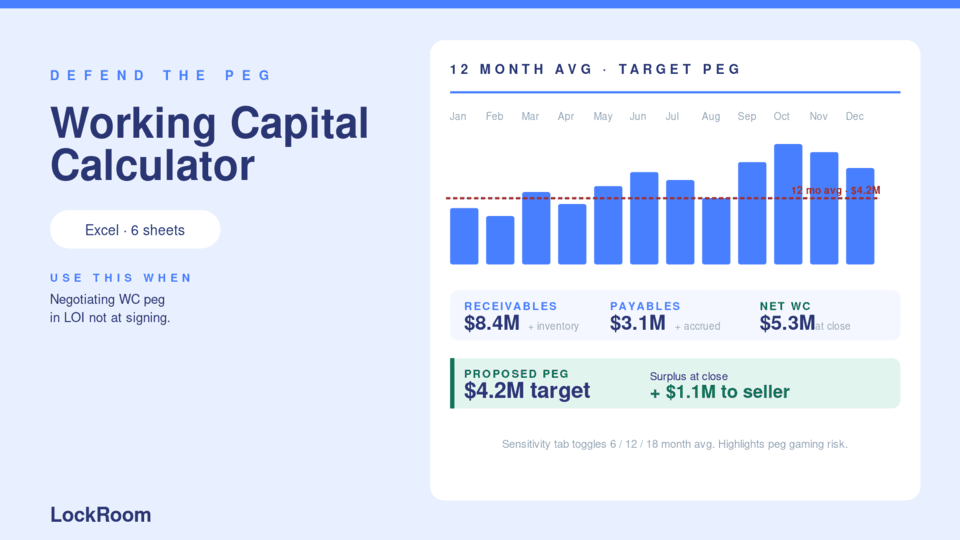
- Trailing 12-month peg builder with monthly true-up logic
- Net debt tie-out lines that match the purchase agreement
- True-up window scenarios showing dollar impact at close
- Sample LOI working capital language to anchor the methodology
What the calculator does
The Working Capital Escrow Calculator models the post-close working capital true-up adjustment under different scenarios. You enter your deal's parameters, and the tool produces:
1. Scenario table. Six closing NWC outcomes from -10% (shortfall) to +5% (surplus) versus the agreed peg. For each, the calculator shows:
- Actual NWC at close
- Variance vs peg
- True-up direction (buyer pays seller, or seller pays buyer)
- Adjustment dollar amount
- Net consideration to seller
2. Benchmark comparison. Your deal's expected adjustment compared to typical claim sizes from SRS Acquiom 2025:
- Average buyer claim (0.9% of EV)
- Median PPA escrow (~1% of EV)
- Material claim band (top 24% exceed 1%)
- Major claim band (top 8% exceed 2%)
3. Methodology and sources. Second tab documenting how the peg is set, the true-up window, dispute resolution, and the cited research underlying the benchmarks.
Who should use this calculator
Sell-side bankers modeling expected proceeds for sellers, sizing escrow during LOI negotiation, and stress-testing retrade exposure across adjustment scenarios.
Founders preparing to sell who need to understand what the true-up adjustment means for their take-home cash 60-90 days post-close.
Buyers modeling expected adjustment risk on the buy side, sizing escrow at the term sheet stage.
Sell-side counsel preparing LOI methodology language and showing the seller what's at stake under different methodology choices.
How to use the calculator
Step 1: Open the Excel file. The Calculator tab is the primary working sheet.
Step 2: Enter your deal's parameters in the yellow input cells:
- Enterprise value (top of section 1)
- Trailing 12-month EBITDA
- Working capital peg (target NWC, typically the QofE-normalized 12-month average)
- Escrow size as % of EV (median ~1% per SRS Acquiom 2025)
- Escrow hold period in months (60-90 days standard)
Step 3: Review the scenario table in section 2. The calculator shows the math under six closing NWC outcomes from -10% shortfall to +5% surplus. Identify your most likely scenario based on the seller's actual working capital trend.
Step 4: Compare to the benchmark table in section 3. The average buyer claim across 1,200+ deals is 0.9% of EV. If your expected scenario falls in line with this average, the deal is structurally normal. If your expected scenario significantly exceeds 1% of EV, the working capital methodology in the LOI should be tightened.
Step 5: Use the methodology tab to validate the assumptions and cite the underlying research in your client memos.
Why working capital matters
Working capital adjustments are now standard on over 90% of private M&A deals per the SRS Acquiom 2025 study. They appear on nearly every LMM deal closing in 2026. Understanding the true-up math is essential for:
- Pricing the deal correctly: the seller's expected proceeds = headline price minus expected adjustment, not just headline price
- Sizing escrow appropriately: enough to cover typical adjustment without over-collateralizing
- Drafting LOI methodology: locking the calculation methodology in the LOI is the single most important retrade defense
- Stress-testing scenarios: understanding the seller's exposure under reasonable downside scenarios
For the full pillar analysis on working capital adjustments, see Working capital and net debt in LMM M&A.
For the broader retrade defense framework, see Post-LOI retrade defense.
For sell-side QofE methodology that produces the peg, see Sell side QofE.
Calculator updates and refresh schedule
The calculator's benchmark stats (average claim, median escrow, claim distribution percentages) are refreshed quarterly against the latest SRS Acquiom Deal Terms Study editions and other practitioner publications. The version date in the file header shows the most recent update.
If you've downloaded an older version, re-download from /resources/working-capital-calculator to get the latest benchmarks.