

Post-LOI Retrade Defense in LMM M&A: How Sellers Anticipate and Counter Buyer Repricing
Retrade is the buyer practice of reducing price post-LOI during exclusivity. Most retrades anchor in QofE findings. Defense starts in week 1, not when the buyer letter arrives.
- Retrade is the buyer practice of reducing price or changing terms post-LOI, after exclusivity is granted but before close. It is the seller's biggest leverage loss in the deal lifecycle.
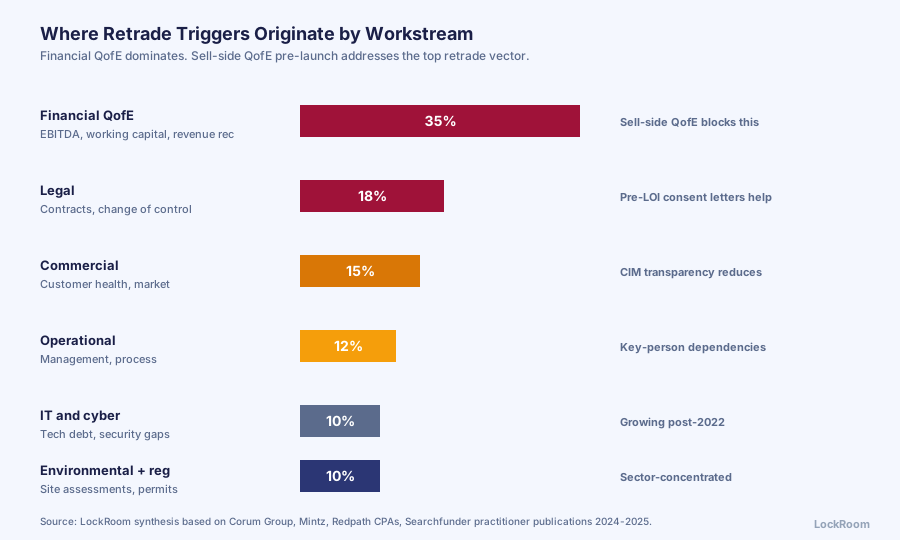
- Most retrade attempts are anchored in financial QofE findings (35% of retrade triggers), legal diligence (18%), commercial diligence (15%), and operational findings (12%) per practitioner data.
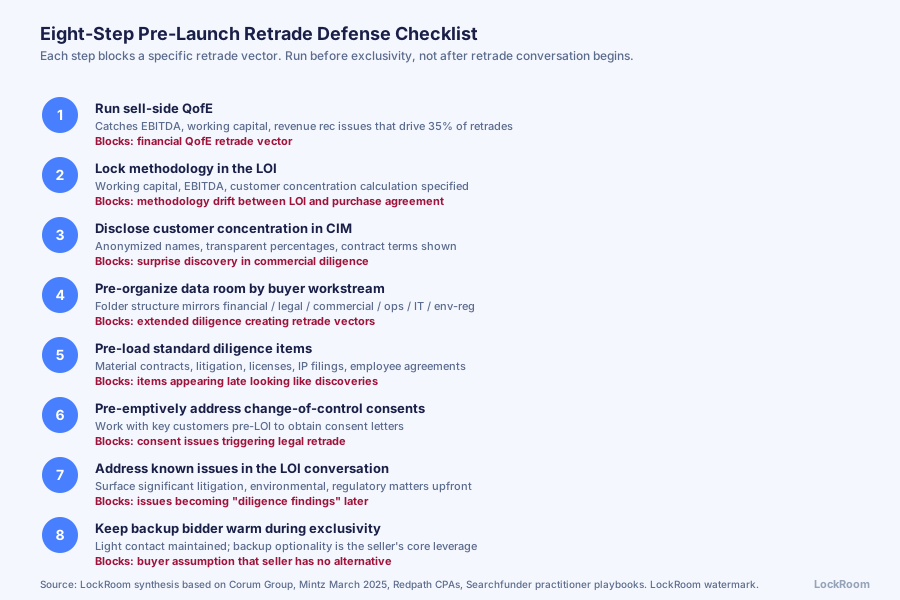
- Best defense is pre-LOI preparation: sell-side QofE, well-organized data room, locked methodology in the LOI, customer concentration disclosed in CIM. Each blocks a specific retrade vector.
- Exclusivity period length matters: 30-45 days typical for LMM, with retrade-trigger language giving the seller termination rights if buyer attempts unfounded repricing.
- Backup bidder optionality is leverage: keep the second-best bidder warm. A buyer who knows they can be replaced retrades less.
- Common retrade triggers: working capital normalization (the QofE catches it differently than the seller priced), customer concentration discoveries, environmental findings, employee retention concerns, key contract change-of-control issues.
- Bottom line: retrade defense starts in week 1 of exclusivity, not when the buyer's letter arrives in week 6. Bankers who run the eight-step prep playbook in this article reduce retrade frequency and magnitude materially.
What is retrade in M&A?
Retrade is the practice of a buyer reducing the purchase price or changing the deal terms post-LOI, typically during exclusivity, before close. The buyer claims diligence findings justify the change. The seller has limited leverage because they are in exclusivity and the other bidders have moved on.
Retrade can take three forms:
Price reduction. The most common: buyer claims the EBITDA, working capital, or customer concentration is worse than priced and asks for $X less.
Term changes. The buyer accepts the original price but asks for changes that reduce effective value: larger escrow, longer indemnity tail, more restrictive non-compete, larger working capital adjustment.
Structure changes. The buyer accepts price but adds contingencies: earnout instead of cash, holdback contingent on customer retention, stock instead of cash.
In all three forms, the seller's effective consideration drops. The seller has to choose between accepting the retrade, walking from the deal (forfeiting weeks of exclusivity), or trying to renegotiate.
What triggers retrade?
Per practitioner commentary across Corum Group, Mintz, Redpath CPAs, and Searchfunder publications, retrade triggers concentrate in five categories:
Financial QofE findings (35% of retrade triggers). EBITDA add-back disputes, working capital normalization differences, revenue recognition timing, customer concentration discoveries. The buyer's QofE provider produces a report showing the EBITDA is X% below what the seller represented; the buyer asks for that X% off price.
Legal diligence findings (18%). Customer contracts with change-of-control clauses requiring consents not yet obtained, litigation discoveries, IP ownership ambiguities, employment agreements with provisions that complicate the buyer's plans.
Commercial diligence findings (15%). Customer interviews surface dissatisfaction the seller didn't disclose. Competitor moves the seller didn't track. Market size assumptions that don't validate.
Operational findings (12%). Key-person dependencies the seller didn't disclose. Process documentation gaps requiring near-term capex. Capacity constraints not visible in the financials.
IT/cyber and environmental (combined 20%). Technical debt, security gaps, environmental matters requiring near-term remediation.
How big are typical retrades?
Retrade magnitudes vary widely. Per practitioner consensus:
- Minor retrade (5% to 8% of EV): most common; based on specific findings the seller can substantively respond to
- Material retrade (8% to 15% of EV): significant findings; often triggers seller pushback, sometimes deal failure
- Major retrade (15%+ of EV): rare; deal often dies if seller has any backup bidder; buyer is signaling serious diligence concerns
For a $30M deal: minor retrade is $1.5M to $2.4M, material is $2.4M to $4.5M, major is $4.5M+. These numbers map roughly to the customer concentration discount tiers documented in Customer concentration in the CIM.
What's the eight-step pre-launch defense?
The most reliable retrade defense is preventing the retrade vectors before exclusivity starts. Per practitioner consensus, the eight-step prep playbook:
Step 1: Run sell-side QofE before going to market. Most reliable single defense. Sell-side QofE catches the EBITDA, working capital, and revenue recognition issues that drive 35% of retrades. The QofE provider's report becomes the methodology benchmark. Buyer's QofE then tests the seller's report rather than building from raw ledgers. See Sell side QofE.
Step 2: Lock methodology in the LOI, not the purchase agreement. Working capital methodology, accounting policies, EBITDA bridge methodology, customer concentration calculation. If the LOI says "to be determined per same accounting policies as historical financials," the buyer gets to interpret. If the LOI says "per the methodology in the [date] sell-side QofE," the methodology is locked.
Step 3: Disclose customer concentration accurately in the CIM. Buyer surprises drive retrade; transparent disclosure eliminates the surprise. See Customer concentration in the CIM.
Step 4: Pre-organize the data room. Buyer-side workstream-organized data room compresses diligence by 1-2 weeks per practitioner data. Faster diligence means less time for buyer's QofE to find issues to retrade on. See Sell side data room folder structure.
Step 5: Pre-load standard items. Material contracts, litigation lists, regulatory licenses, IP filings, employee agreements, environmental reports loaded at marketing phase. Items added late in diligence look like late discoveries even when they're not.
Step 6: Pre-emptively address change-of-control consents. Customer contracts with change-of-control clauses requiring consent are a top legal retrade trigger. Working with key customers pre-LOI (or at LOI signing) to get consent letters reduces this vector.
Step 7: Address known issues in the LOI itself. If you know the business has significant litigation, customer concentration, or environmental matters, surface them in the LOI process. Buyers price these in upfront; addressing them post-LOI as "diligence findings" leads to retrade.
Step 8: Keep the backup bidder warm. Per Mintz's March 2025 commentary, sellers retain leverage by maintaining contact with the second-best bidder during exclusivity. The buyer who knows they can be replaced retrades less.
What LOI structure limits buyer retrade leverage?
Beyond the prep, the LOI structure itself matters. Per practitioner consensus:
Exclusivity period length. 30 to 45 days is standard for LMM (per Mintz 2025). Longer exclusivity gives the buyer more time to find retrade vectors and reduces seller leverage. Don't grant 90+ days unless absolutely necessary.
Retrade-trigger termination rights. Include language that allows the seller to terminate exclusivity (and re-engage with backup bidders) if the buyer attempts a "material" or "unfounded" price change. Defining "material" precisely matters; "any change to the LOI valuation" is too aggressive, "5%+ change without documented diligence findings" is more workable.
Working capital methodology defined in LOI. As noted in step 2 above. The single most important retrade-blocking LOI provision.
Customer concentration referenced in LOI. "Buyer acknowledges customer concentration of X% from top customer as disclosed in CIM section Y." Forces the buyer to price concentration into the LOI rather than retrade on it.
Cap on adjustments. Some LOIs include caps on post-LOI price adjustments without buyer-required termination rights. A 5% cap means buyer can ask for up to 5% but anything beyond requires buyer to forfeit the LOI.
Reverse termination fee. If the buyer terminates without cause, they pay a fee. This is uncommon in LMM but seen on larger deals.
No-shop with provisions. The seller agrees not to shop the deal during exclusivity, but reserves the right to receive unsolicited bids. This is standard.
What's the during-exclusivity defense playbook?
If retrade conversation begins during exclusivity, the seller has tactical options:
Demand specific findings. "What specific finding triggers this conversation?" forces the buyer to document. Vague references to "diligence concerns" can be pushed back on.
Quantify the finding. Ask the buyer's QofE provider to quantify. A claim of "$500K of EBITDA add-back issues" is different from "we have add-back concerns." Specificity allows the seller to respond.
Substantively respond. Many retrade attempts are based on findings the seller can address: producing missing documentation, providing customer references, demonstrating mitigation. Substantive response often closes the conversation without price change.
Negotiate term changes instead of price. If the finding is real but small, negotiate a deal term change (small escrow increase) rather than headline price change. Easier optics for both sides.
Use the backup bidder. "We've stayed in light contact with [backup bidder]" without specifying engagement level signals optionality. Force buyer to consider the cost of losing the deal.
Threaten exclusivity termination. If the LOI includes retrade-trigger termination, invoke it. Force the buyer to choose between accepting original terms or walking.
Walk if necessary. Sometimes the deal is dead. Better to walk in week 5 of exclusivity than accept a 15% retrade in week 7.
What happens if you accept the retrade?
Sometimes accepting is the right move. The math:
- A 5% retrade on a $30M deal is $1.5M
- The cost of restarting the process: 60-90 days of additional time, legal fees of $100K-$300K, banker fees, the risk that the next buyer is worse
- If the retrade is justified by genuine findings, accepting at 5% is often economically rational
But many retrades are not justified. The buyer is testing leverage. Sellers who reflexively accept teach buyers to retrade. Sellers who push back substantively often close at original price.
Per Searchfunder practitioner playbooks, the most successful sellers respond to retrade with:
- Demand for specifics
- Substantive response to findings
- Counter-offer at smaller magnitude
- Threat of exclusivity termination
- Acceptance only if findings are clearly material
Without all five, the seller may be giving up money unnecessarily.
Sector-specific retrade patterns
Healthcare services: regulatory findings drive retrade. Stark, Anti-Kickback, billing audit issues are common late-stage discoveries.
Software / SaaS: customer churn rates and renewal cohort data drive retrade. AI usage and IP ownership now appear as new retrade vectors in 2026.
Manufacturing: environmental findings drive retrade. Pre-LOI Phase I environmental site assessments reduce this vector materially.
Industrial services: customer contract terms drive retrade. Change-of-control consent issues common.
Professional services: partner retention drives retrade. Discoveries that key partners are not committed post-close trigger price changes.
Bottom line
Retrade is the seller's biggest leverage loss in the deal lifecycle. Pre-LOI preparation is the only reliable defense. The eight-step prep playbook (sell-side QofE, locked methodology, organized data room, pre-loaded items, change-of-control consents, addressed known issues, warm backup bidders, retrade-trigger LOI language) blocks the most common retrade vectors before exclusivity starts.
For sell-side bankers running LMM processes:
- Run sell-side QofE before launch above $5M EBITDA
- Lock working capital and EBITDA methodology in the LOI, not the purchase agreement
- Negotiate exclusivity period at 30-45 days; resist longer terms
- Include retrade-trigger termination rights in the LOI
- Maintain light contact with backup bidders throughout exclusivity
- Run substantive defense if retrade conversation begins; demand specifics
For founders preparing to sell:
- Invest in sell-side QofE pre-launch; the cost ($20K-$45K) is a fraction of typical retrade magnitude
- Disclose customer concentration accurately in the CIM
- Address known issues in the LOI conversation, not as "diligence findings" later
- Recognize that exclusivity is the seller's biggest leverage loss; minimize the period
For buyers:
- Understand that aggressive retrade attempts damage relationships and reputation
- Document specific findings before raising retrade conversations; vague references trigger seller pushback
- Recognize that prepared sellers (sell-side QofE, organized data room, locked LOI methodology) have less retrade vulnerability
- Use deal structure (escrow, earnout) to address concerns rather than headline price changes when findings are real but small
LockRoom data rooms support retrade defense directly. The folder structure mirrors buyer diligence workstreams so the seller's data room compresses diligence and reduces buyer time-to-find-issues. Audit logs document buyer access, supporting the seller's narrative if retrade conversations begin. If you are running a process and want a data room organized for retrade defense, [start a free trial](/) or [book a demo](/).
QofE Scope Worksheet
The pre-LOI sell-side QofE scope worksheet that neutralizes the most common retrade levers before a buyer ever sees the financials. Free PDF.