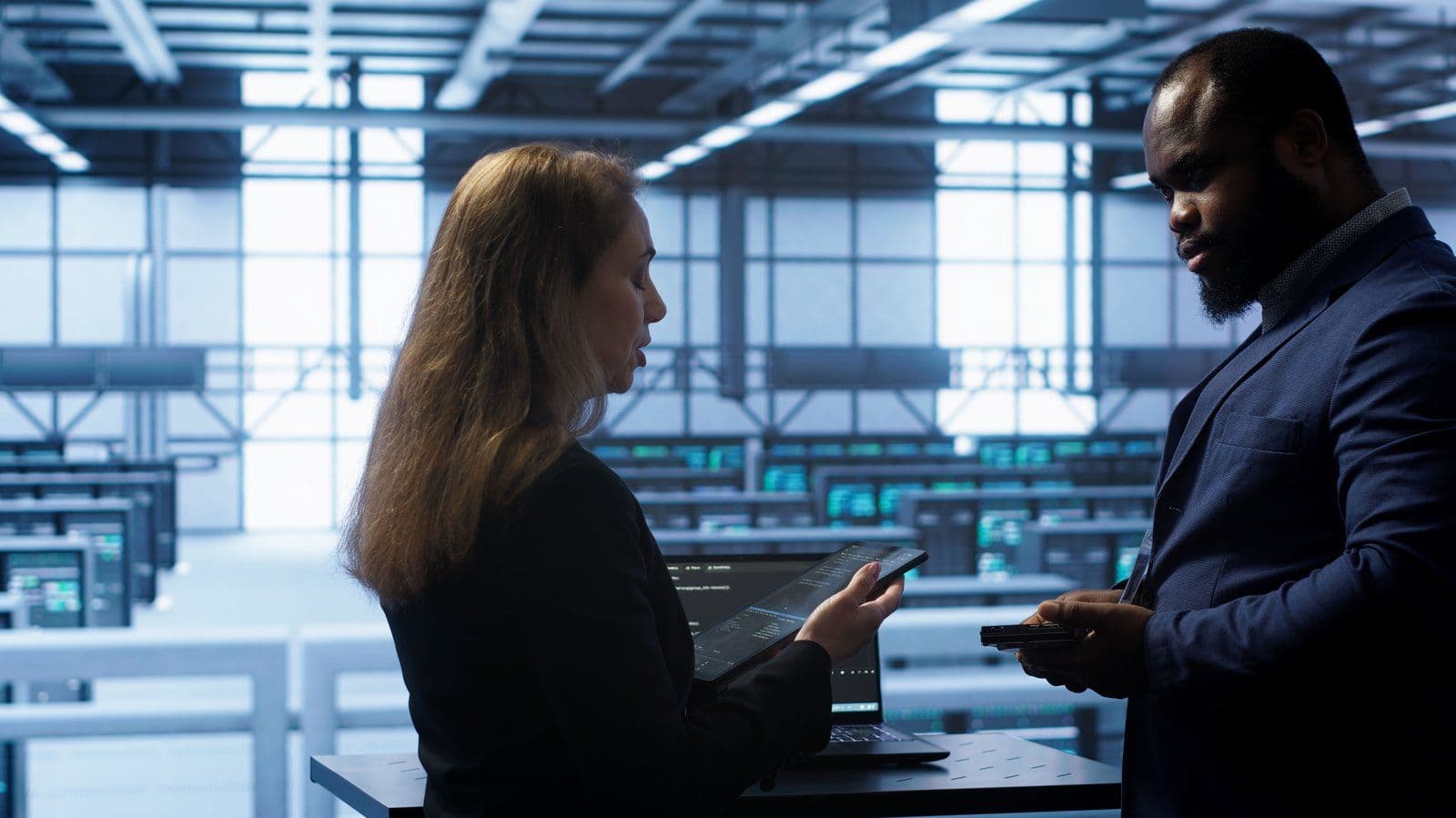

How Data Room Providers Supercharge Collaboration for Remote Teams

TJ Mourzzi
Published At Mon Apr 07 2025

Breaking Down Barriers in a Remote-First World
Remote work will be around for the foreseeable future, along with the issue of smooth collaboration. If teams work across various time zones or work with sensitive files, effective and secure communications are essential.
Data room providers are the best option right now, highlighting the technical world. These powerful digital companies offer more than the ability to save documents; they also facilitate collaboration, improve workflows as well as enhance security for data.
What exactly does it mean to assist remote teams to work better, not harder? Let's get into it.
Key Benefits of Data Room Providers for Remote Teams
1⃣ Centralized Document Management
One of the major hurdles faced by remote teams is access to documents and organizing. The traditional methods of sharing files may be inefficient, leading to problems with control of versions loss of files, as well as security issues. Data room providers address the problem by providing:
⏺ One secured storage facility for all documents makes them accessible from any location.
⏺ real-time updates as well as Version control to stop duplication and miscommunication.
⏺ Advanced search capabilities for locating important data immediately.
⏺ Access levels based on permission ensure that only those with permission can access or modify specific documents.
⏺ Automated backups protect the data from accidental deletion and loss, or corruption.
This centralized approach can help teams from remote locations stay organised and cut down time spent looking for data.
2⃣ Enhanced Security and Compliance
Remote teams typically handle confidential business data, which makes the security of data a priority. Data room companies implement the latest security features, such as:
⏺ End-to end encryption for data security during transit as well as at rest.
⏺ Multi-factor authentication (MFA) to prevent the unauthorized use of your account.
⏺ Controls for access to documents allow administrators to decide who may access, edit, or distribute specific documents.
⏺ Audit tracks and activity monitoring for full transparency and compliance with the standards of the industry.
⏺ Document expiry and watermarking options reduce the chance of leaks.
⏺ AI-powered security detection to detect suspicious actions as well as prevent the risk of a security breach.
This helps businesses stay in the legal and regulatory requirements, including GDPR, HIPAA, and SOC 2, and ensure the security of their data.
3⃣ Improved collaboration with built-in tools
In contrast to traditional file sharing platforms, companies that offer data rooms have tools that are designed to enhance team collaboration, for example:
⏺ Real-time editing of documents and commenting, which reduces the necessity for lengthy emails.
⏺ Workflow and task management automation to ensure the smooth execution of projects.
⏺ Integrated tools for communication (e.g., chat, annotations, and notifications) for teamwork improvement and productivity.
⏺ A role-based collaborative allows different parties to collaborate safely.
⏺ Access offline, which allows group members to operate when they are not connected and to make changes to their sync when they are back online.
The remote collaboration capabilities make it appear as easy as being able to work side-by-side at a desk, which encourages more coordination and increased productivity.
4⃣ Seamless integration with other business Instruments
Modern enterprises rely on a variety of programs to run their daily business. Top data rooms integrate many popular applications, including:
⏺ Platforms for managing projects to facilitate better workflow synchronization.
⏺ Cloud storage services (e.g., Lockroom, Google Drive, Dropbox, OneDrive) for enhancing the flexibility of file sharing.
⏺ Enterprise tools for communication (e.g., Slack, Microsoft Teams, Zoom) to enable real-time, efficient discussions.
⏺ E-signature platform (e.g., DocuSign, Adobe Sign) to expedite approval processes.
⏺ ERP and CRM systems that ensure the smooth flow of data throughout departments.
The connectivity removes the barriers and allows for a smoother workflow across various platforms, which reduces manual work and increases operational effectiveness.
5⃣ Improved Due Diligence and Deal Management
Businesses engaged through mergers, acquisitions, financial transactions, or fundraising the use of data rooms is essential. They can provide:
⏺ Secure file sharing as well as document review for clients, investors and legal teams.
⏺ Audit logs that are time-stamped to ensure transparency during due diligence.
⏺ Quick and efficient Q&A feature for answering questions fast and efficiently.
⏺ Uploading in bulk and structuring indexing to make large-scale documentation easy to browse.
⏺ The tracking is extremely detailed that showing who has accessed the files, and the length of time.
⏺ Customizable dashboards and reports give insight into engagement levels as well as documenting interactions.
This allows for smoother negotiation and faster decision-making processes as well as a reduction in the risks that come with transactions that are confidential.
Conclusion:
In the current digital world Remote teams need more than simple storage for files. Data rooms bring organization as well as security and a seamless, collaborative table, making work remotely faster and safer. With these innovative options, companies can overcome communication hurdles as well as safeguard confidential data and increase productivity regardless of where they may be anywhere in the world.
If your company hasn't yet considered data rooms before, this is the perfect opportunity to tap into their potential.