

Process Letter Design for LMM Auctions: First Round and Second Round
A sell-side banker sends 60 teasers to potential buyers. Forty sign the NDA and get the CIM. Ten make it to management presentations. Six submit IOIs.
- The process letter is the seller's most underused leverage tool. It defines the auction's rules, signals seriousness, and shapes bidder behavior before any specific terms are exchanged.
- Two-letter sequence: First-round process letter for IOI submission (week 5-6 of marketing) + Second-round process letter for LOI submission (week 9-10).
- First-round process letter: timeline, bid format requirements, IOI submission deadline (3-5 weeks typical), management access expectations, priority diligence list.
- Second-round process letter: LOI submission requirements (price, structure, financing, regulatory, exclusivity terms requested), expected timeline, conditions for shortlisting.
- Required IOI elements: valuation range with underwriting assumptions, deal structure (cash, rollover, earnout, escrow), financing plan, regulatory considerations, timetable, diligence requests.
- The seller signals seriousness through specificity: vague process letters invite vague bids; precise process letters force precise responses.
- Bottom line: process letters are the sell-side banker's main interface with the buyer universe before exclusivity. Quality of the process letter directly correlates with quality of bids received.
What is the process letter and why does it matter?
The process letter is a document the sell-side banker sends to invited buyers explaining how the auction will run, what the buyer needs to submit, and what the seller's expectations are. There are typically two process letters in a standard two-step auction:
First-round process letter: sent with the CIM after NDA. Defines IOI requirements and the path to the second round.
Second-round process letter: sent to shortlisted bidders after IOI evaluation. Defines LOI requirements and the path to exclusivity.
The process letter matters because it controls what the buyer's deal team submits. A precise process letter produces precise bids. A vague process letter produces vague bids. The seller's banker can only compare bids on the dimensions the process letter required.
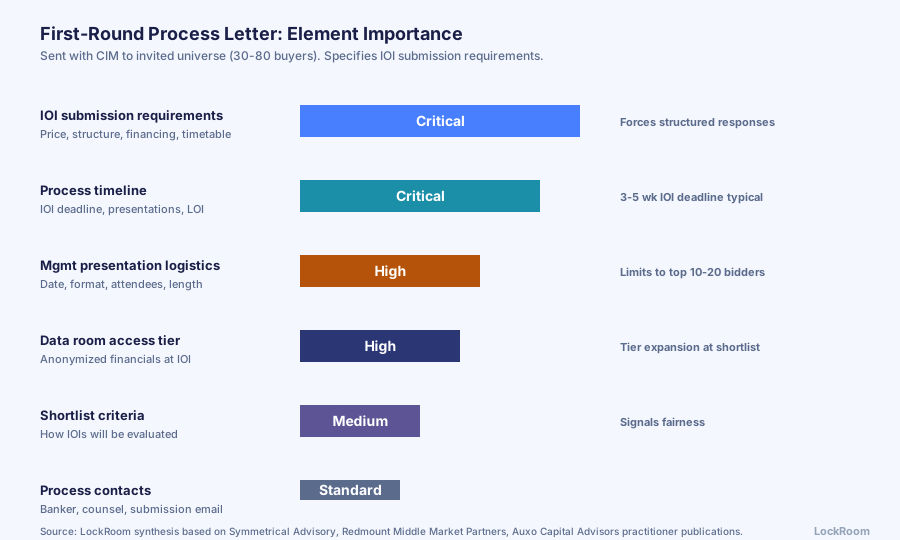
What goes into the first-round process letter?
Per Symmetrical Advisory and Redmount Middle Market Partners practitioner publications, the first-round process letter should cover:
1. Process timeline. When IOIs are due (typically 3-5 weeks from CIM distribution), when management presentations will occur, when shortlist decisions will be communicated, when LOIs are due, target close date.
2. IOI submission requirements. What the IOI must contain. Specifying this in the process letter lets bankers compare bids on the same dimensions:
- Valuation range with explicit underwriting assumptions (EBITDA used, multiple, working capital assumption)
- Deal structure (cash, rollover equity, earnout, escrow)
- Financing plan (committed equity, debt commitment letters, contingencies)
- Regulatory considerations (HSR, sector-specific approvals)
- Expected timetable (LOI to close days)
- Priority diligence requests (what the buyer wants in the data room before LOI)
- Management access expectations (when, format, length)
3. Management presentation logistics. Date, format (in-person, video), location if in-person, attendees on each side, length, post-presentation Q&A handling.
4. Data room access expectations. What's in the room at IOI stage (anonymized financials, market overview, anonymized customer concentration), what gets opened to shortlisted bidders post-IOI.
5. Shortlist criteria. How the seller will evaluate IOIs and choose shortlist. Vague criteria invite gamesmanship; specific criteria signal fairness.
6. Buyer universe disclosure rules. What the buyer can disclose about the deal externally (typically nothing) and the consequences for breach.
7. Process management contacts. Banker as primary point of contact; counsel for legal questions; specific email addresses for IOI submission.
What goes into the second-round process letter?
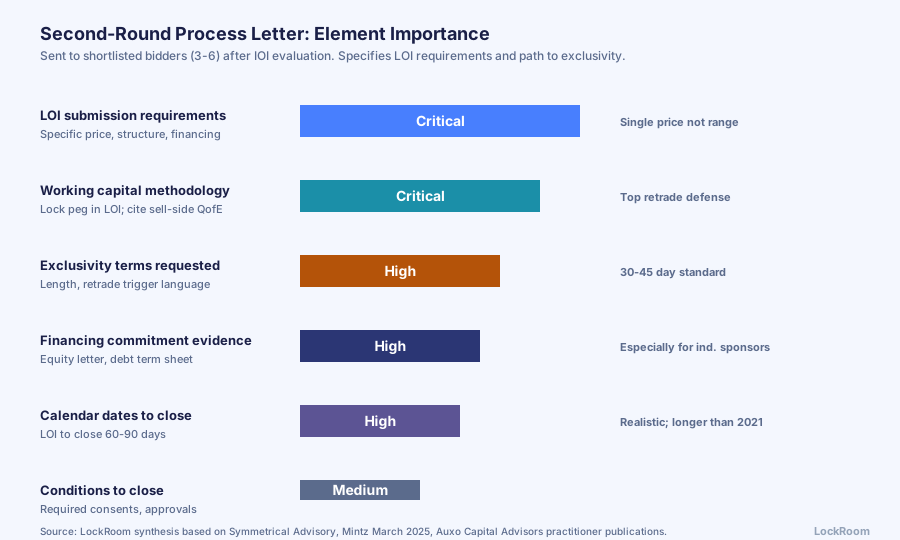
The second-round process letter assumes IOIs have been received and evaluated. It outlines LOI requirements and the path to exclusivity. Typical elements:
1. LOI submission deadline. Typically 4-6 weeks from second-round process letter distribution, longer than IOIs because LOIs require deeper diligence work.
2. LOI submission requirements. Per practitioner consensus, more depth than IOI:
- Specific purchase price (single number or narrow range), not a wide range
- Detailed deal structure (cash, rollover, earnout, escrow specifics)
- Working capital methodology (often required to commit to seller's QofE methodology)
- Financing source (committed equity, debt term sheet, financing contingencies)
- Exclusivity terms requested (length, breakup fees, retrade-trigger provisions)
- Regulatory consents required (HSR specifics, industry-specific consents)
- Conditions to closing (what must happen between LOI and close)
- Specific representations and indemnification approach (R&W insurance commitment, escrow size, indemnity caps)
3. Detailed timeline expectations. Specific calendar dates from LOI signing through close (typical 60-90 days post-LOI per Buyer diligence playbook).
4. Pre-LOI diligence access. What expanded data room access the bidder gets before LOI submission. This is where shortlisted bidders see the full QofE and named customer data.
5. Exclusivity rules. Who gets exclusivity, when, and on what terms. Standard 30-45 days. Not negotiable for LMM auctions if the seller wants leverage.
What's the difference between the two letters?
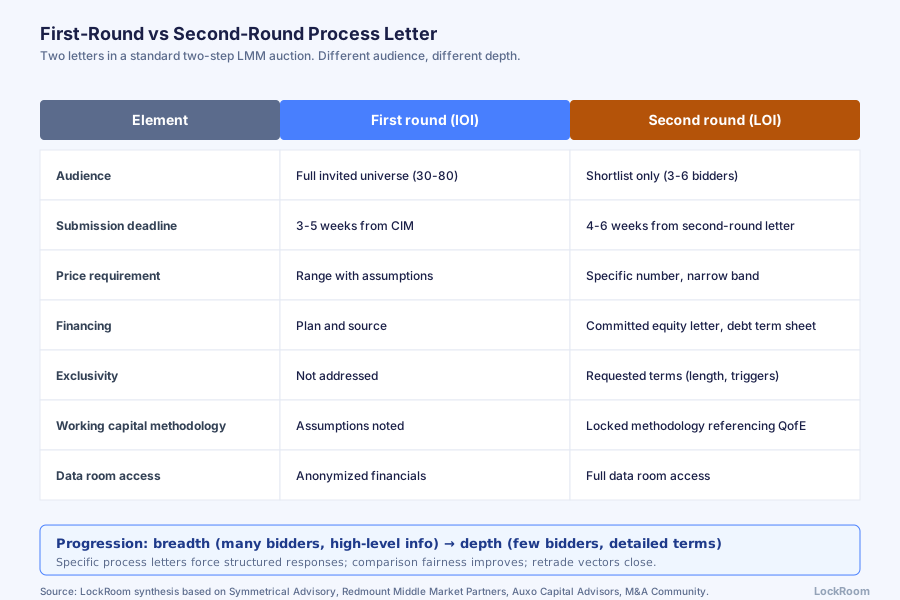
The two letters serve different purposes:
| Element | First-round (IOI) letter | Second-round (LOI) letter | |---|---|---| | Audience | Full invited universe (30-80 buyers) | Shortlisted bidders (3-6) | | Required depth | High-level | Detailed | | Price | Range with assumptions | Specific number | | Financing | Plan and source | Committed letter | | Timing | Targeted target close | Specific calendar dates | | Exclusivity | Not addressed | Requested terms | | Data room access | Anonymized financials | Full data room | | Submission deadline | 3-5 weeks | 4-6 weeks |
The progression is from breadth (many bidders, high-level info) to depth (few bidders, detailed terms). The process letters define this progression.
What signals seriousness in process letter design?
A few specific design choices signal that the seller is running a real, professional auction:
Specific submission deadlines. "IOIs due 5pm ET on [specific date]" not "IOIs due in approximately 4 weeks." Buyers respect deadlines that look respectable.
Itemized submission requirements. "Your IOI must include: [numbered list]" forces structured responses. "Please address the following considerations" allows skipping items.
Defined evaluation criteria. "We will evaluate IOIs on [criteria]" tells bidders what matters. Vague criteria invite gamesmanship.
Professional formatting. PDF letterhead with banker's logo, contact details, named signers. Hand-crafted Word document with no header signals amateur process.
Realistic timelines. Don't promise close within 60 days if the deal is complex. Buyers see unrealistic timelines and either (a) bid low because they expect timeline slip retrade or (b) submit weak IOIs because they don't take the timeline seriously.
Reasonable buyer universe. Sending the process letter to 200 buyers signals desperation. Sending to 30-80 well-targeted buyers signals professional sourcing.
Co-signed or banker-signed. Process letters signed by the seller's CEO with the banker as second signer signal a professional, well-managed seller. Process letters signed by the banker alone signal banker-managed deal which is also professional.
Common process letter mistakes
Vague requirements. "IOIs should address valuation and structure" without specifying format. Result: buyers respond with whatever they want; bankers can't compare.
Missing financing requirement. Not asking for the financing plan upfront. Result: late discovery that a top bidder has no financing.
Unrealistic timelines. Promising close in 45 days when the sector typically runs 90 days. Result: buyers bid low or skip.
No buyer universe size guidance. Process letter doesn't tell buyers approximately how many other firms received it. Result: buyers can't gauge their competitive position.
Different requirements for different bidders. Sending different process letters to different bidders invites legal exposure and signals favoritism. Process letters should be uniform.
Missing process management contacts. Buyers don't know who to contact for what. Process gets bottlenecked at the banker.
Promising things you can't deliver. "We will provide management presentations within two weeks" when the seller's CEO is on vacation. Buyers lose trust in week 3 when the presentation slips.
How does the process letter shape buyer behavior?
Three behavioral effects:
Bidder selection. A demanding process letter (specific requirements, tight timelines, structured submissions) selects for serious buyers and discourages tire-kickers. Lower IOI count but higher quality is usually better than the reverse.
Bid quality. Specific submission requirements force bidders to do real work before submitting. This produces stronger IOIs and a stronger basis for advancement decisions.
Process credibility. Bidders who see a professional process letter assume the seller is well-advised, has real alternatives, and will not accept retrade attempts late. This affects the bid level and reduces post-LOI surprises.
Comparison fairness. When all IOIs respond to the same structured questions, the banker can compare cleanly. When IOIs are unstructured, comparison becomes subjective and contentious.
Sector-specific process letter considerations
Healthcare: regulatory considerations (Stark, Anti-Kickback, billing audit) should appear in the process letter so bidders factor in regulatory diligence timeline.
Software / SaaS: financial metrics expected (ARR, NRR, churn) should be specified so IOIs reference the same metrics.
Manufacturing: capex normalization assumptions, environmental considerations, customer concentration thresholds should be flagged.
Insurance services: book of business analysis methodology and contingent value rights structures should be specified.
Financial services: regulatory considerations (FINRA, state insurance commissioners) should be flagged.
Cross-border deals: jurisdictional considerations, foreign exchange treatment, antitrust regimes outside the US.
Bottom line
Process letters are the seller's main interface with the buyer universe before exclusivity. They define the auction's rules, signal the seller's seriousness, and shape what bidders submit. Quality of the process letter directly correlates with quality of bids received.
For sell-side bankers running LMM processes:
- Send a uniform first-round process letter with the CIM specifying IOI requirements
- Send an updated second-round process letter to the shortlist after IOI evaluation
- Specify exact submission deadlines, structured submission requirements, and evaluation criteria
- Include process management contacts and process flow diagrams
- Resist negotiating process letter terms with individual bidders to preserve uniformity
For founders preparing to sell:
- Review your banker's draft process letter before distribution; it represents you to the market
- Insist on professional formatting and specific requirements
- Recognize that the process letter signals to bidders how serious and well-managed the auction is
For buyers receiving process letters:
- Read the process letter carefully; non-compliance with stated requirements is the fastest way to fall off the shortlist
- Note the submission deadlines and plan backwards from them
- Address every requirement in your IOI; gaps signal weak bids
- Note the buyer universe size if disclosed; this informs your competitive positioning
LockRoom data rooms support process letter execution by mirroring the structured access tiers the process letter specifies. Anonymized financials at IOI stage, full data room at shortlist, audit logs throughout. The data room becomes the operational extension of the process letter. If you are running a process and want a data room organized to match your process letter's access tiers, [start a free trial](/) or [book a demo](/).
Buyer Outreach Tracker
Spreadsheet for managing the LMM auction process from outreach through IOI and LOI. Tracks every buyer, every NDA, every milestone the process letter sets. Free Excel.