

How LMM Buyers Run Diligence in 2026: A Sell-Side Banker's Playbook
A buyer's diligence team in 2026 looks nothing like a buyer's diligence team in 2018. The QofE provider is mandatory above $5M EBITDA.
- Buyer diligence in 2026 is longer than 2021. LMM closings that were 45 days post-LOI in 2021 now run 60 to 90 days. Buyers refuse to compress.
- Six core workstreams: financial (QofE), legal, commercial, operational, IT/cyber, environmental/regulatory. Tax often gets its own thread on larger deals.
- Quality of Earnings is now standard on essentially all LMM deals above $5M EBITDA. Pre-LOI sell-side QofE is the most reliable retrade defense.
- AI usage diligence is new for 2026. If the target business uses AI as a significant input or output, expect a dedicated diligence thread covering proprietary vs licensed, data rights, model dependencies.
- Talent and wage inflation is a top risk factor in labor-dependent sectors (manufacturing, healthcare services, construction). Diligence increasingly covers retention, succession, and union exposure.
- Buyer's QofE provider sets the peg. The seller who runs sell-side QofE first controls the methodology. The seller who waits gets the buyer's methodology.
- Bottom line: in 2026, sellers should plan for 60 to 90 days of intensive diligence, organized data rooms, and pre-launch sell-side QofE. Bankers who don't anticipate this lose retrade leverage and timeline credibility.
What are the six core diligence workstreams?
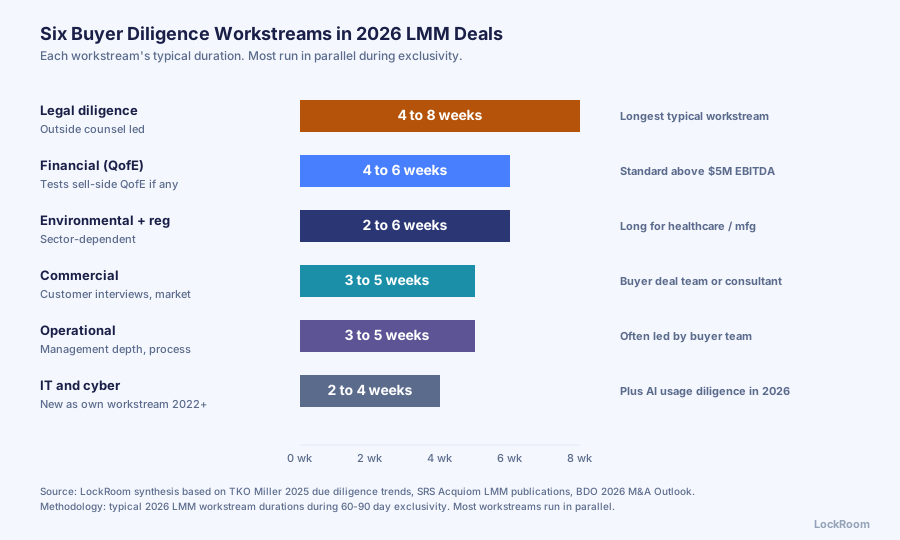
Modern buyer-side diligence runs six parallel workstreams during exclusivity. Per practitioner publications (TKO Miller, SRS Acquiom, BDO), the workstreams are:
1. Financial diligence (QofE). Quality of Earnings, working capital normalization, revenue quality, EBITDA bridge, customer concentration, gross margin trends. The QofE provider produces a report that is the foundation for purchase price negotiation.
2. Legal diligence. Material contracts, litigation, IP ownership, regulatory compliance, change-of-control provisions, employee agreements. Outside counsel runs this; the buyer's deal team reviews findings.
3. Commercial diligence. Customer interviews (with seller permission), market position, competitor analysis, customer references, growth thesis validation. Often led by the buyer's deal team or specialized consulting firm.
4. Operational diligence. Management depth, organization design, process documentation, capacity utilization, supply chain resilience, succession planning. Increasingly requires sector-specific expertise.
5. IT and cyber diligence. Technology stack, data security, integration complexity, technical debt, license compliance, cyber incident history. Now a dedicated workstream on most LMM deals; was an afterthought pre-2020.
6. Environmental, regulatory, tax. Environmental site assessments, regulatory licenses and compliance, tax positions, transfer pricing, deferred liabilities. Tax often splits as its own thread on $50M+ deals.
How long does buyer diligence take in 2026?
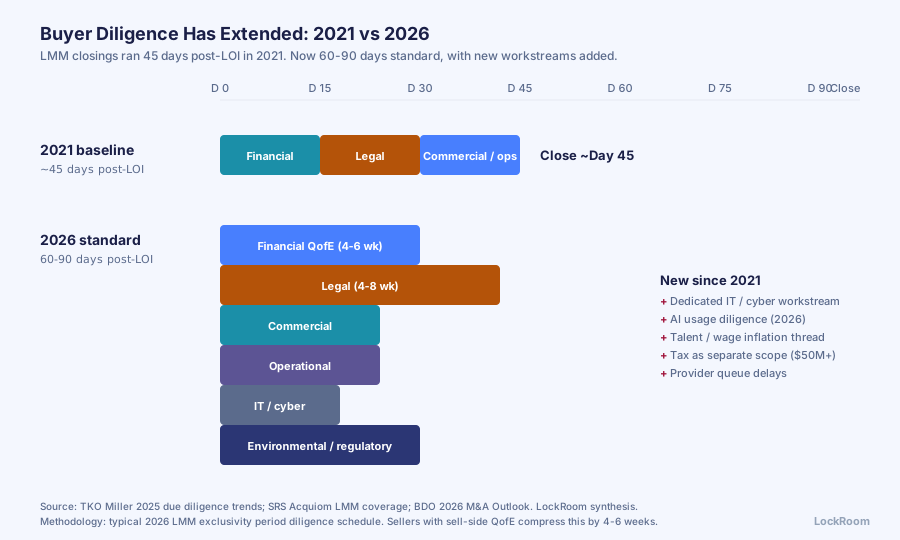
Per TKO Miller's 2025 analysis: LMM closings in 2021 were regularly scheduled 45 days post-LOI. By 2025-2026, that has stretched to 60 to 90 days post-LOI as standard, with complex deals running longer.
The drivers:
Buyer caution. Post-pandemic and post-2022 rate environment, buyers are more thorough. They refuse to compress diligence to win the deal.
Third-party provider queues. QofE providers, environmental consultants, IT diligence firms get booked. A 2-week queue at the QofE provider extends the deal by 2 weeks.
Expanded scope. Cyber, AI usage, talent diligence add weeks that didn't exist 5 years ago.
Sell-side QofE acceptance. When the seller has run sell-side QofE, buyer diligence can compress by 4-6 weeks because the buyer's QofE tests the seller's report rather than building from raw ledgers (per Capstone Partners practitioner data).
The implication for sell-side bankers: setting 90 day expectations with the seller is the new norm. Promising 45 days and delivering 90 days erodes credibility. Plan for 90; if it closes in 60, the seller is happy.
What's new in 2026 diligence?
Three diligence threads have emerged or expanded since 2021:
AI usage diligence. If the target business uses AI as a significant input or output, expect a dedicated thread. Buyers want to understand:
- Is the AI proprietary (the company built it) or licensed (third party)?
- What data rights does the company have? Does the company own the training data, or did it license it?
- What dependencies exist on third-party model providers (OpenAI, Anthropic, etc.)?
- What happens to the AI capability if a key model provider changes terms or pricing?
- What customer-facing AI features could expose the company to regulatory risk?
This thread was barely a checkbox in 2022. By 2026 it's a substantive scope item on tech-enabled LMM deals.
Cyber diligence. Pre-pandemic, cyber was usually folded into IT diligence at a cursory level. Post-2022 ransomware events, cyber is its own workstream. Scope:
- Past cyber incidents and remediation
- Current security posture (MFA, encryption, backup, incident response)
- Compliance with industry standards (SOC 2, ISO 27001, HIPAA where applicable)
- Insurance coverage (cyber liability policy)
- Vendor cyber posture (suppliers and customers)
Talent and wage inflation diligence. Per BDO 2026 outlook, talent scarcity is a top risk in labor-dependent sectors. Diligence covers:
- Senior leader retention and succession
- Mid-level manager bench depth
- Wage inflation trajectory (LMM deals in manufacturing, construction, healthcare have seen 15%+ wage inflation since 2022)
- Union exposure and collective bargaining timelines
- Geographic labor market dynamics
These three threads add 2-3 weeks to the diligence timeline relative to a 2021 deal.
What does each workstream catch?
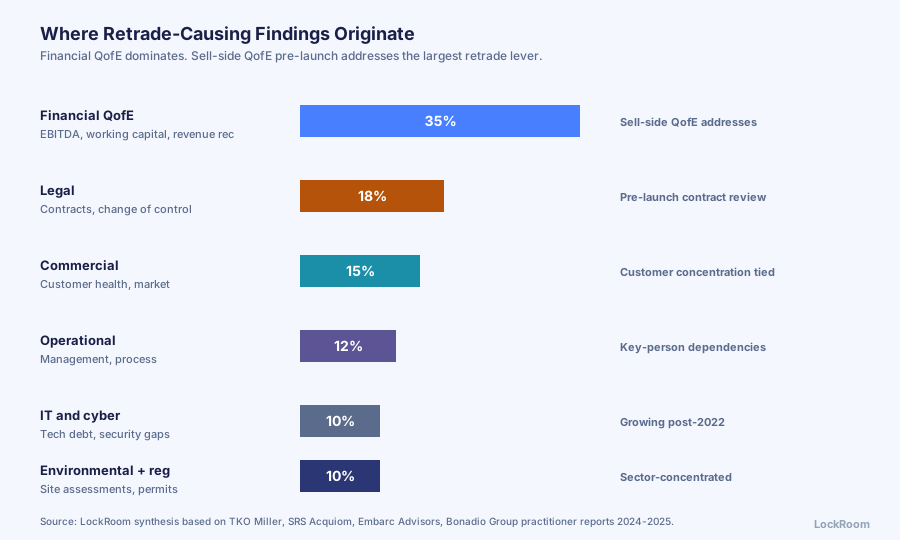
The dispute and retrade patterns by workstream:
Financial (QofE) catches: EBITDA add-back disputes, working capital normalization differences, revenue recognition timing, one-time item exclusions, customer concentration. See Sell side QofE for the seller-side companion piece.
Legal catches: change-of-control clauses requiring consents, litigation exposure, IP ownership ambiguities, employee non-compete enforceability, vendor contracts with unfavorable terms.
Commercial catches: customer dissatisfaction the seller didn't disclose, competitor moves the seller didn't track, market size assumptions that don't hold up to validation.
Operational catches: key-person dependencies, process documentation gaps, capacity constraints not visible in the financials, supply chain single-source dependencies.
IT and cyber catches: technical debt requiring near-term capex, security gaps requiring near-term spend, license non-compliance, integration complexity higher than estimated.
Environmental, regulatory, tax catches: undisclosed environmental liabilities, regulatory violations not previously surfaced, deferred tax positions that may not hold up to audit, transfer pricing exposure on cross-border deals.
How should sell-side bankers prepare the data room for diligence?
Six tactical recommendations from practitioner consensus:
1. Run sell-side QofE before going to market. Most reliable retrade defense; compresses buyer's QofE by 4-6 weeks. See Sell side QofE.
2. Organize the data room by workstream. Folder structure should mirror buyer diligence workstreams: 01_Financial, 02_Legal, 03_Commercial, 04_Operations, 05_IT_Cyber, 06_Environmental_Regulatory. See Sell side data room folder structure.
3. Pre-load standard items. Material contracts, litigation lists, regulatory licenses, IP filings, employee agreements, environmental reports should all be in the data room at the marketing phase, not added during diligence under time pressure.
4. Anonymize customer data appropriately. Customer lists with revenue concentration but anonymized names in the CIM and early diligence. Real names in deeper diligence after exclusivity. See Customer concentration in the CIM.
5. Tier permissions. Different buyer types and stages get different access. Surface-level financials at IOI, deeper financials at LOI shortlist, full data room at exclusivity. Audit logs document access by buyer for post-close.
6. Designate a diligence coordinator. Someone on the seller's team owns diligence response. Bankers who try to coordinate everything end up bottlenecked. CFO or general counsel typically takes this role.
What does sell-side QofE actually catch before launch?
Per Embarc Advisors and Bonadio Group practitioner reports, sell-side QofE typically catches:
- 40% of findings: EBITDA add-back disputes
- 25%: working capital normalization
- 15%: revenue recognition timing
- 10%: customer concentration concerns
- 10%: other (capex, gross margin, deferred maintenance)
Catching these before the buyer's QofE means the seller controls the narrative. The buyer's QofE then tests the seller's report rather than discovering issues. Retrade leverage shifts to the seller.
How does the data room interact with each workstream?
The data room is the operational interface for all six workstreams. Each workstream has typical document needs:
Financial: trailing 36-month financials, monthly and annual, with detail; bank statements; tax returns; QofE provider reports if any; customer concentration analysis; AR aging; working capital trend tables.
Legal: material contracts (typically top 50 customers, top 20 suppliers, all financing agreements, all leases); litigation summaries; corporate records; subsidiary documentation; IP filings.
Commercial: market analysis; customer testimonials; competitor analysis; sales pipeline; customer satisfaction metrics; growth roadmap.
Operational: organizational chart; senior team biographies; process documentation; capacity utilization data; supply chain mapping.
IT and cyber: technology stack documentation; security audit reports; SOC 2 / ISO certificates if applicable; cyber incident history; vendor contracts for technology providers.
Environmental, regulatory, tax: environmental site assessments; regulatory license documentation; permit list; tax returns and audit history; transfer pricing studies if cross-border.
A well-organized data room with these categories pre-loaded compresses diligence by 1-2 weeks per practitioner reports. A poorly organized data room extends diligence by 2-4 weeks because requests have to flow back to the seller iteratively.
Sector-specific diligence patterns
Healthcare services. Regulatory diligence dominates: Stark, Anti-Kickback, billing audits, payer mix analysis, HIPAA compliance. Add 2 weeks for regulatory thread.
Software / SaaS. AI usage and IP ownership are central. NRR, churn, customer contracts diligenced deeply. Tech stack and license compliance reviewed.
Manufacturing. Environmental diligence (current and historical), capex normalization, customer contracts with volume commitments, supply chain mapping.
Industrial services. Route density, customer contracts, environmental matters, equipment age and maintenance.
Professional services. Partner equity arrangements, customer concentration tied to specific people, succession planning, partner non-competes.
Insurance services. Regulatory compliance dominates; book of business analysis is the primary financial diligence focus.
Financial services. Regulatory diligence dominates; specific compliance programs reviewed.
Bottom line
Buyer diligence in 2026 is a 60 to 90 day process with six core workstreams plus emerging threads (AI usage, cyber, talent). Sellers who anticipate this and prepare get compressed timelines and stronger negotiating positions. Sellers who don't lose retrade leverage and credibility with buyers.
For sell-side bankers running LMM processes:
- Set 90 day diligence expectations with the seller upfront
- Run sell-side QofE before going to market for $5M+ EBITDA businesses
- Organize the data room by buyer workstream from launch, not under diligence pressure
- Designate a seller-side diligence coordinator before exclusivity starts
- Pre-load standard items (contracts, licenses, litigation summaries)
For founders preparing to sell:
- Plan for 90 days of intense diligence after LOI signing
- Ensure your CFO and general counsel are available to support diligence response
- Recognize that pre-LOI investment in QofE and data room organization compresses post-LOI timeline
- Understand that diligence itself has expanded since 2021 (cyber, AI, talent now standard threads)
For buyers:
- Build queue management into deal scheduling (QofE providers and IT firms book up)
- Coordinate workstreams to run in parallel rather than serially
- Recognize that well-prepared sellers compress your QofE by 4-6 weeks
- Use cyber and AI diligence early; surprises late in diligence kill deals
LockRoom data rooms are organized to support the six-workstream diligence model directly. The folder structure mirrors buyer workstreams (Financial, Legal, Commercial, Operations, IT/Cyber, Environmental/Regulatory). Permission tiers let you control access by buyer type and stage. Audit logs document who accessed what for both buyer-side comfort and post-close dispute resolution. If you are running a process and want a data room organized for modern buyer diligence, [start a free trial](/) or [book a demo](/).
Sell-Side Diligence Prep Checklist
The full pre-launch diligence prep checklist used to get a sell-side process ready for the six buyer workstreams. Mapped to the buyer diligence playbook. Free PDF.