

4 Things to Look For in IOIs
How to read non binding bids and sort the real offers from the sandbags. Sources and uses red flags. The pre LOI pacing decisions that protect price.
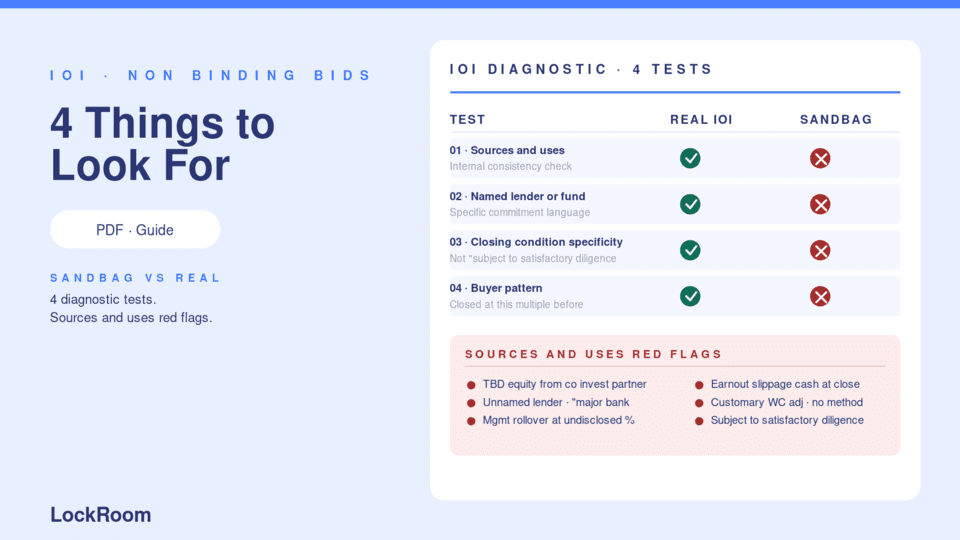
- Distinguishing real IOIs from sandbag offers using four diagnostic tests
- Sources and uses red flags including TBD equity, unnamed lenders, undisclosed rollover
- How many IOIs a healthy LMM process generates and what high vs low volume signals
- Pre LOI pacing decisions that compound: deadline cadence, meeting selection, exclusivity timing
- How to respond to top, mid, and bottom tier IOIs without damaging future processes
What's in the guide
The PDF walks through how to read an IOI, the four diagnostic tests for separating real offers from sandbags, the sources and uses red flags, and the pre LOI pacing decisions that determine how much leverage the seller carries into exclusivity.
The four diagnostic tests
- Sources and uses internal consistency. The numbers add up. The equity check matches the buyer's typical fund deployment. The debt commitment ties to a named lender at a credible multiple.
- Named commitments. The lender or fund is named. Generic "debt to be arranged" or "equity from family office" is a red flag.
- Specificity on closing conditions. Real IOIs list specific closing conditions. Sandbag IOIs hide behind "subject to satisfactory completion of due diligence."
- Buyer pattern. The buyer has closed deals at the multiple they are quoting. If the buyer has never closed at 7x EBITDA but is quoting 7.5x, the seller should triangulate.
Why sandbag IOIs work
Sandbag IOIs work because sellers anchor on the highest IOI they receive and discount everything else against it. A sophisticated buyer at the top of the range becomes the reference point, and weaker IOIs look unreasonable. The seller signs LOI with the top buyer, who then retrades down to where the buyer actually wanted to be all along.
The four tests prevent the anchor. An IOI that fails the tests is not a real bid; it is the buyer's opening position in a negotiation that has not started yet.
See also The LOI Checklist for the clauses that lock leverage once a real bid converts to an LOI.
Sources and uses red flags
- TBD equity. Buyer states "equity from a co invest partner to be determined." Seller has no idea who is actually writing the check.
- Unnamed lender. "Debt commitment from a major bank lender." Major bank lenders provide commitment letters; refusing to name them is a tell.
- Undisclosed rollover. Buyer assumes 30 percent management rollover when the seller has not agreed to any rollover. The buyer is parking optionality.
- Earnout slippage. Cash at close listed below the headline price, with the gap covered by an earnout the seller did not request.
- Working capital ambiguity. "Subject to customary working capital adjustment" with no methodology. Pin in LOI or expect a retrade.
The IOI volume signal
For a healthy LMM process targeting 30 to 60 buyers in the broad outreach, expect 8 to 14 IOIs. Below 8 means the teaser did not convert (positioning problem) or the CIM raised concerns (data problem). Above 14 usually means the price range was set too low and weak hands are flooding in.
Volume is itself diagnostic. Eight IOIs from named PE platforms and strategics is healthier than 18 IOIs from family offices and search funds.
Pre LOI pacing decisions
- IOI deadline cadence. Same day deadline creates parallel competitive pressure; rolling deadlines let buyers calibrate against each other's offers and price down.
- Management meeting selection. Top 3 to 4 IOIs to meetings; broader invites dilute the credible alternative signal.
- Exclusivity grant timing. LOIs received same day, exclusivity granted seven days later after final round of feedback. Granting exclusivity at IOI is leverage giveaway.
These three decisions compound. Same day IOI deadline plus top 4 meetings plus delayed exclusivity creates 90 percent of the leverage at LOI signing.
Who should use this guide
Sell side bankers who have lost price to sandbag IOIs and want a framework for separating real offers from anchoring tactics.
Founders reading their first stack of IOIs without a banker.
Sell side counsel reviewing IOI structure for commercial leverage points.
Pair with Mastering M&A Leverage for the offensive tactics that work once the seller has separated real bids from sandbags.