

5 Keys to Market Reviews
How to scope and time a market check before the formal launch. The five signals that swing valuation and the questions buyers ask first.
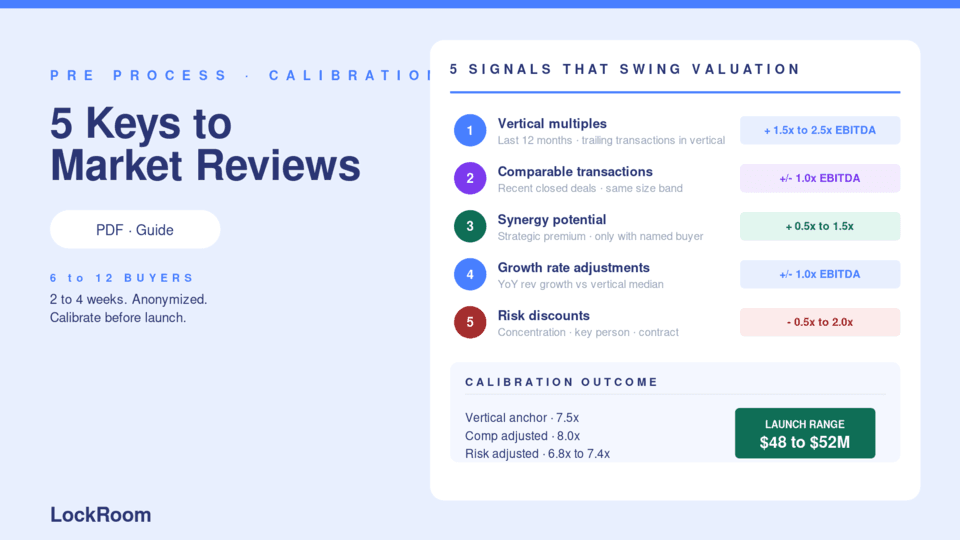
- How to scope and time a market check, with the 6 to 12 buyer rule
- What buyers actually look for first when given anonymized review materials
- Five signals that swing valuation: vertical multiples, comparables, synergy, growth, risk
- When a seller should skip the review entirely (the inbound offer test)
- The five critical mistakes bankers make and how each one resets buyer reference points
What's in the guide
The PDF covers the discipline of a pre-process market review: what it is, what it tests, and the five mistakes that quietly cost the seller price before the formal launch.
- Scope and timing. Two to four weeks, 6 to 12 buyers, anonymized teaser only.
- What buyers look at first. Vertical, size, growth, concentration, in that order.
- Five signals that swing valuation. Vertical multiples, recent comparables, synergy potential, growth-rate adjustments, risk discounts.
- The five critical mistakes. Each one a leverage leak that reduces what buyers will pay.
- When to skip the review. Inbound interest is itself the signal.
Why the market review matters
Sellers who skip the review often launch at a price the market will not pay. The buyers come back with IOIs 15 to 25 percent below the asking range. The seller is now negotiating from a worse anchor than they started with.
Sellers who do the review well launch at a credible price. The buyers come back with IOIs in or near the asking range. The seller holds price through diligence because the price was credible from day one.
Same business. Same buyers. Different outcome based on whether the seller calibrated before launch.
The five critical mistakes
- Conflating the review with the launch. Sending the CIM during a "review" leaks the formal process and resets buyer expectations.
- Disclosing the company name early. Anonymized review only. Naming the seller before NDA is signed kills positioning.
- Treating buyer feedback as gospel. Buyers in a review have an interest in talking down the multiple. The banker filters feedback against vertical comps.
- Skipping comparable transaction work. No vertical comps means the seller has no anchor to defend against buyer pushback.
- Letting the review drag past four weeks. A six-week review signals indecision and the buyer universe pulls back.
The 6 to 12 buyer rule
Why 6 to 12 and not more? The market review is calibration, not outreach. Each conversation is structured: anonymized teaser, 30 minute call with the buyer's deal team, specific questions about valuation, process design, and concerns. Six conversations is the minimum sample to triangulate; twelve is the practical maximum before the review becomes the launch by accident.
Pair this guide with The CIM Template Outline for what the buyer receives after the review converts to NDA, and The Buyer Outreach Tracker for staging the formal launch once the review is done.
Who should use this guide
Sell side bankers running their first or fifth LMM process who want to calibrate price before the formal launch.
Founders considering whether to engage a banker or run a process directly.
Strategic buyers and PE platforms who want to understand what disciplined sell side looks like from the other side.