

VDR Pricing in 2026: Flat Rate vs Per-Page, and the Hidden Fee Problem
A boutique investment banker quotes a virtual data room at $20K. The deal closes 8 months later. The VDR bill is $145K.
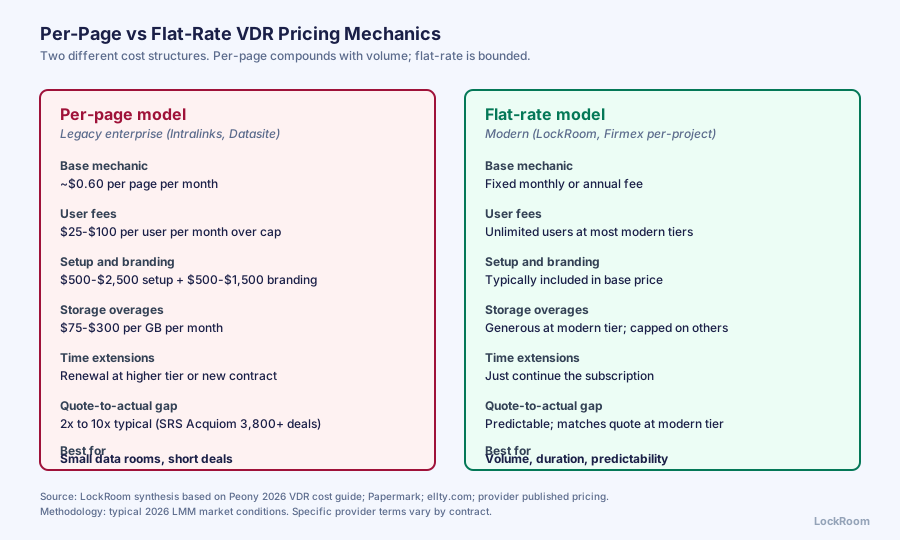
- Two pricing models dominate VDR: per-page (legacy enterprise) and flat-rate (mid-market and modern). Each is structurally different and produces different total costs.
- Per-page pricing typically runs $0.60 per page (Intralinks-style); a typical 50,000 page LMM data room incurs $30,000 in page fees alone, before user, storage, or overage charges.
- Average enterprise VDR costs run 2x to 10x initial quotes once per-page fees, user charges, and storage overages are factored in (SRS Acquiom analysis of 3,800+ deals).
- Mid-market quoted ranges: $15,000 to $60,000 for one M&A process at enterprise providers; $3,000 to $7,000 for small deals at mid-tier.
- Flat-rate models (LockRoom $375/mo single room or $6,000/yr unlimited; Firmex per-project) eliminate per-page exposure but require predicting deal duration.
- Hidden fees common across all enterprise tiers: $500-$2,500 setup, $500-$1,500 custom branding, $75-$300 per GB storage overages.
- Bottom line: per-page pricing rewards small light data rooms; flat-rate pricing rewards anything with serious volume or duration. Most LMM deals are the latter, so flat-rate wins in 2026.
What is per-page VDR pricing?
Per-page pricing is the legacy enterprise model in which the VDR provider charges a per-page fee for every page hosted in the data room. Pages are counted at upload, including duplicates, drafts, and historical versions.
Typical per-page rate in 2026: approximately $0.60 per page (Intralinks-style), though rates vary $0.30 to $1.50 depending on volume tier and contract negotiation.
The math:
- 10,000 page data room: $6,000 in page fees
- 50,000 page data room: $30,000 in page fees
- 100,000 page data room: $60,000 in page fees
These numbers are page fees only. They do not include user fees, setup, branding, support, or storage overages. Most enterprise VDR contracts add those on top.
The model rewards small, lean data rooms and punishes anything with significant document volume. A typical lower middle market deal generates 30,000 to 80,000 pages between management presentations, financial schedules, customer contracts, employee files, IP documentation, and supporting materials.
What is flat-rate VDR pricing?
Flat-rate pricing is the modern model in which the VDR provider charges a fixed monthly or annual fee independent of page count. Common variations:
- Per-project flat fee: a single fee covers one M&A process from setup to close. Typical range $3,000 to $7,000 for small deals; $15,000 to $60,000 for mid-market.
- Monthly subscription, single room: a fixed monthly rate per active data room. LockRoom's $375/mo is in this tier; mid-tier providers run $500 to $3,000/mo.
- Annual unlimited subscription: one annual fee covers an unlimited number of rooms over the year. LockRoom's $6,000/yr is in this tier; enterprise tiers go significantly higher.
Flat-rate eliminates per-page exposure but requires predicting deal duration. A 6-month flat-rate contract is fine for most LMM processes; a 12-month deal that drags to 18 months can require a renewal at the original rate.
How do real costs compare on a representative deal?
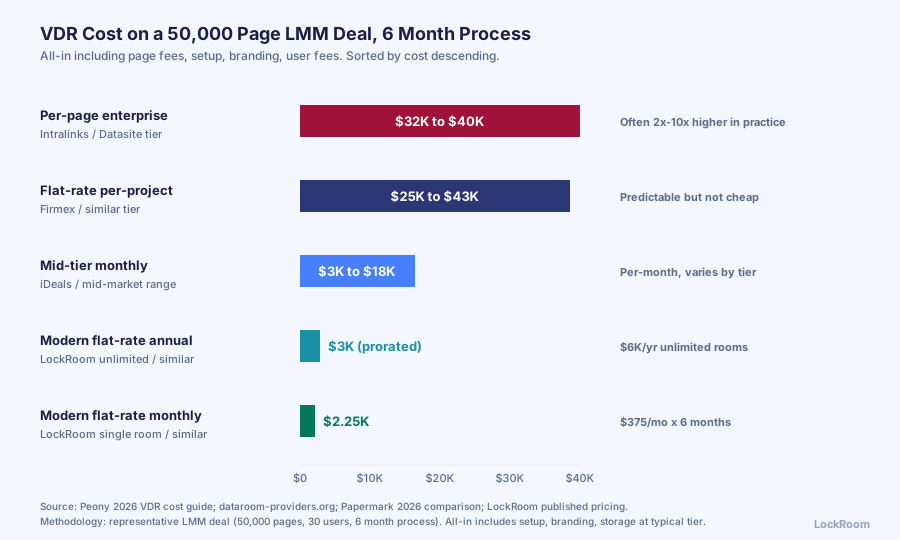
Consider a typical LMM sell-side process: $30M deal, 50,000 pages of documents, 6 month process, 30 active users (banker team, seller team, 5 to 10 buyer teams during diligence). For named vendor quotes on this exact deal profile, see the full virtual data room pricing breakdown for 2026.
Per-page model (Intralinks-style):
- Page fees: 50,000 pages × $0.60 = $30,000
- User fees: typically included in higher tiers, sometimes $50/user/month for power users
- Setup fee: $1,500
- Custom branding: $750
- Storage overages: minimal at this scale, but $75-$300/GB on overflow
- Total: approximately $32,000 to $40,000 quoted; final bill commonly higher
Flat-rate per-project model (Firmex-style):
- Per-project fee: $25,000 to $40,000 for a 6-month mid-market M&A process
- Setup fee: included in some plans, separate in others ($500-$1,500)
- Branding: included in some plans, separate in others ($500-$1,500)
- Total: approximately $25,000 to $43,000
Flat-rate monthly subscription (LockRoom-style):
- Single room monthly: $375 × 6 months = $2,250
- Or unlimited annual: $6,000/year prorated for 6 months = $3,000
- Setup fee: included
- Branding: included
- Total: approximately $2,250 to $3,000
The 10x to 14x difference between the highest and lowest tier is real. The lower tiers do not "skimp" on features; they reflect a structurally different pricing model that has emerged in the last 5 years to serve the lower middle market specifically.
Where do hidden fees come from?
Per-page pricing is not the only place enterprise VDRs add cost. Common surcharges:
Setup and implementation fees. $500 to $2,500. Some providers waive on annual contracts; others charge regardless.
Custom branding. $500 to $1,500 to apply the seller's or banker's logo to the data room. Standard on enterprise tiers, often included on flat-rate tiers.
User or admin overages. Some plans cap users; additional users or admin seats incur $25 to $100/user/month.
Storage overages. $75 to $300 per GB per month. A data room with significant video content (management presentations, customer testimonial videos) can incur material storage fees.
Time extensions. Per-project fees often assume a 6-month process. Extensions to 9 or 12 months trigger renewal fees.
Support tier upgrades. Phone support, dedicated account manager, weekend coverage often live in higher tiers.
Q&A module add-ons. Q&A management is a paid add-on at some providers; included at others.
Audit log and compliance reporting. Standard at most tiers; premium at some.
Document redaction. Often a paid add-on, particularly for AI-assisted redaction.
The compounding effect is what produces the 2x to 10x quote-to-actual gap per SRS Acquiom data. A $20K initial quote with $5K of setup, $1K of branding, $4K of user overages, $3K of storage, and a 3-month extension at $10K becomes $43K final bill. That trajectory is normal at enterprise VDRs.
When does per-page pricing make sense?
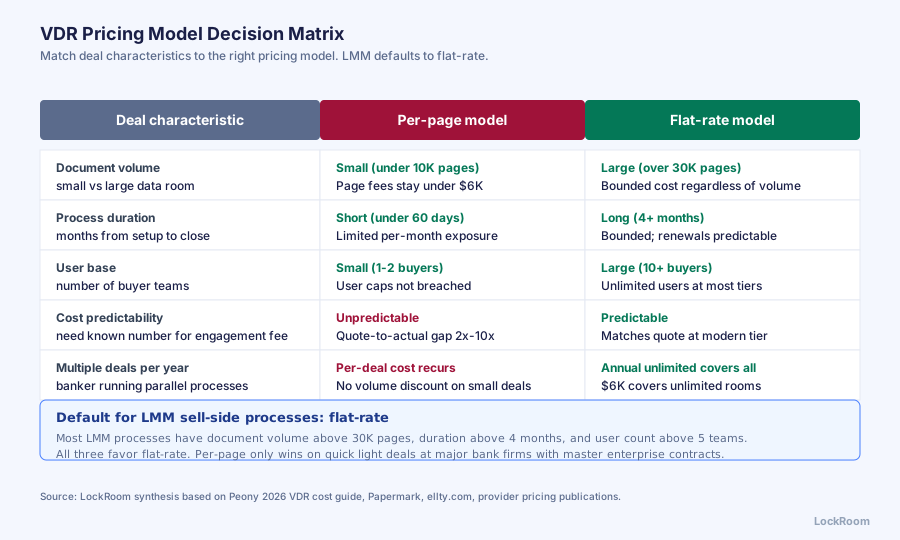
Per-page pricing is the right model when:
The data room is small. Under 10,000 pages, per-page fees stay under $6,000.
The deal is short. A 60-day process minimizes user and storage fees.
The buyer's banker has a master contract. Investment banks with enterprise contracts at Intralinks or Datasite get bulk discounts that change the per-page math.
The seller has institutional buyer relationships. Repeat M&A advisors who maintain the same VDR across multiple deals amortize setup costs.
For everyone else, per-page is structurally expensive in 2026. The model was built for an era when most M&A documents were paper that had to be scanned and digitized. In 2026, most M&A documents are digital from the start, so the per-page input cost is near zero, but the per-page output charge persists.
When does flat-rate pricing make sense?
Flat-rate pricing wins when:
The data room has volume. Above 30,000 pages (typical LMM deal), flat-rate is structurally cheaper than per-page.
The deal is long. Anything 4+ months favors flat-rate because per-month exposure is bounded.
The seller runs multiple processes. Annual unlimited flat-rate plans amortize over multiple deals.
Predictability matters. Sellers and bankers who quote VDR cost in their engagement fees need a known number, not a sliding bill.
The user base is large. Auctions with 10+ bidders generate user count overages that hit per-page contracts hard.
The 2026 LMM consensus is that flat-rate is the right default for sell-side processes above $5M EBITDA. Below that scale, the absolute cost difference may not justify the switching effort.
How should you evaluate VDR pricing before signing?
Five tactical recommendations:
1. Get the all-in quote in writing. Force the provider to itemize: page fees, user fees, setup, branding, storage tier, support tier, extension fees. If they can't itemize, walk.
2. Stress-test for the 12-month scenario. Many quotes assume 6 months. What does the bill look like at 12 or 18 months? Per-page providers often charge per page per month, so duration multiplies cost.
3. Verify user caps. How many users are included? What does the next tier cost? Auctions blow through user caps fast.
4. Read the storage tier. What's the included storage? Video, audio, large engineering files burn storage fast.
5. Negotiate the extension policy. Many providers will not extend at the original rate; they require renewal at higher tier or a new contract.
For LMM deals specifically, the negotiation leverage is in flat-rate or per-project models. Enterprise providers have been forced to offer flat-rate options to compete with newer entrants. Ask for it. If they refuse, shop elsewhere.
What about LockRoom's pricing?
LockRoom is built around flat-rate pricing. Two structures:
Single room monthly subscription: $375/month, includes unlimited pages, unlimited users, setup, branding, audit logs, and support. Suitable for sellers running a single deal.
Unlimited annual subscription: $6,000/year, includes unlimited rooms, unlimited pages, unlimited users, all features. Suitable for bankers running multiple deals or sellers with multiple subsidiaries.
The pricing reflects a structural choice: flat-rate is where the LMM segment is going, so LockRoom is built for it. There are no per-page fees, no user caps, no setup fees, no branding fees, no storage overages on standard usage.
This is direct positioning, not commentary on competitors. The cost comparison above shows LockRoom at the bottom of the range; that's by design. Whether LockRoom is the right VDR for a specific deal depends on more than price (security, compliance, support quality, integration with banker workflows). Pricing is one factor among several. See Best VDR for boutique investment banks 2026 for the broader comparison framework.
Bottom line
VDR pricing has split into two models. Per-page rewards small, light, fast deals at enterprise providers with master contracts. Flat-rate rewards everything else. Most LMM deals fall in the second category.
For sell-side bankers:
- Default to flat-rate pricing for any deal expected to exceed 30,000 pages or 4 months
- Itemize the all-in quote at signing; verify extension policy
- Build the VDR cost into your engagement fee at the realistic 12-month number, not the optimistic 6-month quote
- Switch out of per-page contracts at renewal if you're routinely paying overages
For founders selecting a VDR:
- Ask your banker for the all-in cost at the worst case; don't accept "around $X"
- Recognize that per-page providers benefit from your data room growing
- Flat-rate predictability lets you plan deal proceeds without VDR surprise
For VDR buyers comparing options:
- Get itemized quotes from at least three providers, including at least one flat-rate option
- Ask each provider what their typical 6-month and 12-month bills look like for a 50,000 page LMM deal
- Verify what's included vs add-on (Q&A, redaction, audit logs, branding, support tier)
LockRoom is built for flat-rate pricing because that's where the LMM segment is going. If you're tired of per-page surprises and want a known number, start a free trial or see the pricing page.
Compare flat-rate vs per-page in real numbers
LockRoom publishes flat-rate annual pricing publicly. See the full comparison against Datasite, Intralinks, Firmex and others before signing any contract.